
The Leadership Decision: Human Restoration
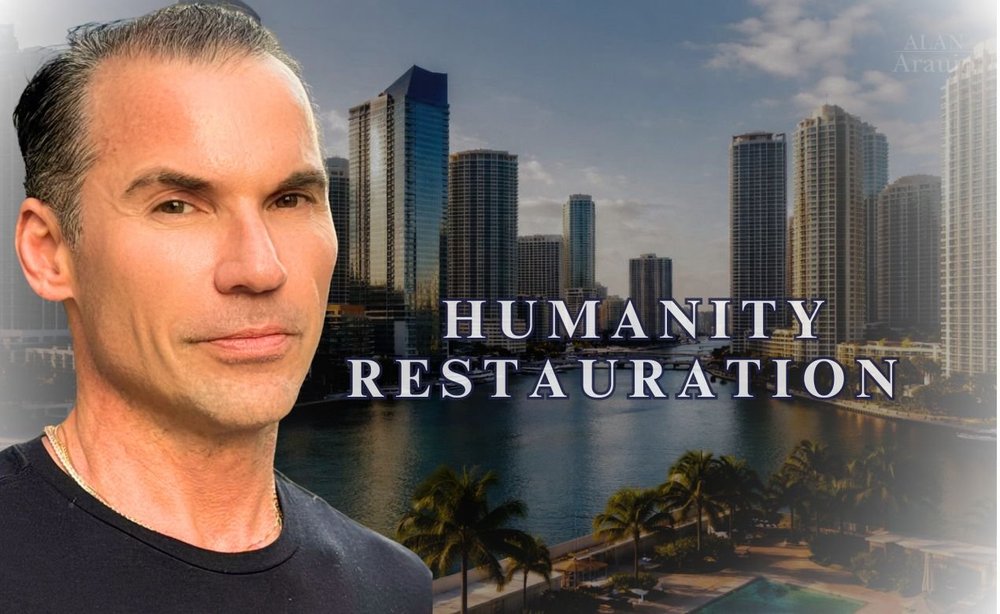
Human Restoration in the Age of AI
AI, Operational Intelligence, and the Future of Human Leadership
It took the telephone seventy-five years to reach one hundred million users. The mobile phone took sixteen. The internet took seven. ChatGPT reached the same milestone in just two months.
That statistic is repeated so often that it risks losing its meaning. Most people hear it and think about technology. I hear it and think about leadership.
Because technology has never been the difficult part. Human adaptation has always been the difficult part.
Throughout history, every major innovation promised to save time. Yet somehow, people became busier. Every breakthrough promised greater freedom. Yet somehow, people became more overwhelmed. Every system promised efficiency. Yet somehow, many organizations became more complex.
That is why I believe we are asking the wrong question about artificial intelligence.
Will AI replace people? I believe the better question is: how much of our humanity have we already surrendered before AI ever arrived?
For years, organizations have asked highly capable people to spend their days performing repetitive work. Answering the same questions. Moving information from one place to another. Managing unnecessary friction. Repeating decisions that should have been systematized years ago.
We became so accustomed to inefficiency that we started calling it work. In many cases, the human being became the middleware between disconnected systems.
That is not leadership. That is maintenance.
The more I studied artificial intelligence, the more I realized that the greatest opportunity was not automation. It was restoration.
Restoration of judgment. Restoration of creativity. Restoration of presence. Restoration of meaningful human interaction.
The future of leadership is not about replacing people with machines. It is about removing machine work from people.
The Era of the Library vs. The Era of the Engine
The internet fundamentally changed access to information. For the first time in human history, knowledge became searchable at a global scale.
The internet became humanity's largest library. Its purpose was retrieval. You searched. You found. You consumed.
Artificial intelligence is fundamentally different. AI is not a library. AI is an engine.
It does not simply retrieve information. It synthesizes information. It connects ideas. It identifies patterns. It helps generate answers that did not exist moments earlier.
The internet helped us find what was known. Artificial intelligence helps us explore what is possible.
We are moving from search and retrieve to ask and create.
This shift is larger than many people realize. The organizations that understand this transition early will have an extraordinary advantage.
The ones that do not may find themselves operating with twentieth-century processes inside a twenty-first-century environment.
Why Humans Became Machines Before Machines Became Intelligent
One of the greatest misconceptions surrounding AI is the belief that technology is what threatens human work.
In many ways, the opposite is true. Long before artificial intelligence entered the conversation, people had already begun functioning like machines.
Endless email chains. Repetitive administrative tasks. Manual data entry. Constant interruptions. Low-value operational decisions. Layers of complexity that added little value to clients, teams, or organizations.
The result was predictable. Highly capable people spent less time thinking and more time processing. Less time creating and more time reacting. Less time connecting and more time maintaining.
This is where leadership enters the conversation.
Artificial intelligence should not be viewed as a replacement for human capability. It should be viewed as a tool that restores human capability.
The objective is not fewer humans. The objective is better use of humans.
That is a fundamentally different mindset.
What Real Estate Taught Me About Artificial Intelligence
Long before wellness, hospitality, and artificial intelligence became central to my work, I spent decades in luxury real estate.
At first glance, real estate and artificial intelligence seem unrelated. One is built on buildings. The other is built on algorithms.
But over time I discovered they are connected by the same principle: people.
For more than twenty years, I sat across the table from buyers, sellers, investors, developers, attorneys, architects, and families making some of the most important decisions of their lives.
I learned something no software can teach. People rarely buy the product. They buy the feeling.
A residence was never just a residence. A penthouse was never just a penthouse. What people were truly purchasing was confidence, security, belonging, opportunity, and peace of mind.
The transaction was simply the vehicle. The experience was the destination.
That lesson stayed with me. It became one of the foundational principles behind everything I would later build.
Hospitality Taught Me More About AI Than Technology
When I founded Lux MedSpa Brickell, I expected to learn more about skincare, wellness, and hospitality. What I did not expect was that hospitality would become one of my greatest teachers about artificial intelligence.
Over the years, I observed thousands of guest interactions. Thousands of reviews. Thousands of opportunities to build trust.
And one pattern became clear. People rarely remember the transaction. They remember how they felt.
Guests do not visit a spa because they simply want a facial. They do not book a massage because they simply want a treatment. Those are services.
The real reason they walk through the door is because of how they want to feel.
They want to feel restored. They want to feel confident. They want to feel understood. They want to feel cared for. They want to feel that, even briefly, someone has created space for them in a world that constantly demands their attention.
That realization changed everything.
At Lux MedSpa Brickell, hospitality is not something that happens around the treatment. Hospitality is the treatment.
The experience begins before the appointment and continues long after it ends. Every interaction matters. Every touchpoint matters. Every opportunity to create clarity matters.
The more than 2,200 five-star reviews we have earned were not built by technology. They were built by people.
By listening. By paying attention. By creating trust one interaction at a time.
Ironically, that is also why I became so interested in AI. Not because I wanted less human interaction. Because I wanted more.
The AI Synergy Framework
As I studied organizations, leadership systems, and artificial intelligence adoption, I began to notice a recurring pattern.
Successful organizations do not win because they possess better software. They win because they possess better alignment.
This observation became the foundation for what I call the AI Synergy Framework.
The framework is built on a simple premise: technology should amplify human potential rather than compete with it.
AI Synergy combines four elements:
- Operational Intelligence: systems that reduce friction and increase clarity.
- Human Leadership: judgment, empathy, communication, and accountability.
- Client Experience: the intentional design of every interaction.
- Artificial Intelligence: the engine that supports consistency, scale, and execution.
When these four elements operate together, organizations become significantly more effective. Not because they work harder. Because they work smarter.
More importantly, they create space for people to do what only people can do.
The Restoration of Human Leadership
Many leaders view AI as a software decision. I believe it is a leadership decision.
The organizations that thrive in the next decade will not necessarily have the best technology. They will have the clearest understanding of what should remain human.
Human leadership is becoming more valuable, not less valuable.
Because as information becomes abundant, judgment becomes scarce. As automation becomes accessible, wisdom becomes differentiating. As efficiency increases, trust becomes the ultimate competitive advantage.
This is why Human Restoration matters.
The future belongs to leaders who understand that technology can accelerate execution but cannot replace character.
Technology can support decisions but cannot own responsibility. Technology can generate information but cannot create genuine care.
The leaders who recognize these distinctions will be the ones who build enduring organizations.
The Next Decade Belongs to Human-Centered Organizations
The next decade will not be defined by artificial intelligence alone. It will be defined by how organizations choose to use it.
Some will focus exclusively on automation. Others will focus exclusively on people. The strongest organizations will understand both.
They will build systems that improve consistency while protecting humanity.
They will leverage AI to remove friction while strengthening relationships.
They will use technology to create more opportunities for trust, not fewer.
The future does not belong to organizations that use the most AI. It belongs to organizations that understand where AI belongs and where humanity must remain.
That distinction will separate leaders from followers.
Learn to Surf the Wave
It took humanity thousands of years to reach eight billion people. Today, billions of AI interactions occur every day.
The wave is not coming. The wave is already here.
The question is no longer: is the technology ready for us?
The real question is: are we ready to stop searching and start reasoning?
Are we prepared to restore judgment? To restore creativity? To restore presence? To restore human leadership?
Technology will continue to evolve. The platforms will change. The tools will change. The industries will change.
But one thing remains remarkably constant.
People invest in trust. People invest in experiences. People invest in how they want to feel.
The future belongs to those who understand both the operational side and the human side of leadership. One without the other eventually breaks.
The organizations that thrive will not simply adopt artificial intelligence. They will learn how to work alongside it. They will learn how to amplify human potential.
And most importantly, they will learn how to surf the wave rather than be overwhelmed by it.
That is the leadership decision.
That is Human Restoration.
About Alan Araujo
Alan Araujo is an AI strategist, keynote speaker, entrepreneur, and founder of Lux MedSpa Brickell. His work focuses on the intersection of artificial intelligence, luxury hospitality, operational intelligence, and human-centered leadership.
Learn more on the About Alan Araujo page, explore more insights on AlanAraujo.com, or discover the operational proof behind these ideas at Lux MedSpa Brickell’s article hub.
Human Restoration FAQs
Answers about Human Restoration, AI Synergy, leadership, operational intelligence, hospitality, and the philosophy behind Alan Araujo’s work.
What is Human Restoration?
Human Restoration is Alan Araujo’s leadership philosophy that argues artificial intelligence should not replace people. Instead, AI should restore people to the work that requires judgment, creativity, empathy, hospitality, trust, and meaningful human connection.
What is the AI Synergy Framework?
The AI Synergy Framework is Alan Araujo’s operating model for combining artificial intelligence, operational intelligence, client experience, and human leadership. The goal is to reduce friction, improve consistency, strengthen trust, and create more time for meaningful human interaction.
Why does Alan Araujo believe AI is a leadership decision?
Many organizations view AI as a technology project. Alan believes it is a leadership project. The future belongs to organizations that understand where AI belongs and where human judgment becomes more valuable because AI exists.
How can AI improve client experience without replacing human connection?
AI can remove repetitive tasks, improve communication, increase consistency, and reduce operational friction. This allows teams to spend more time listening, guiding, supporting, and creating trust. The objective is not fewer human interactions. The objective is better human interactions.
What industries can benefit from Human Restoration principles?
Human Restoration applies to hospitality, healthcare, wellness, luxury services, real estate, education, professional services, and virtually any organization seeking to scale while preserving trust, quality, and meaningful human experiences.
What role did real estate play in shaping Alan Araujo’s philosophy?
After more than two decades in luxury real estate, Alan learned that people rarely buy the product itself. They invest in confidence, certainty, belonging, and how they want to feel. That lesson became the foundation for his work in hospitality, wellness, leadership, and artificial intelligence.
How does Lux MedSpa Brickell connect to Human Restoration?
Lux MedSpa Brickell serves as the operational proof behind many of Alan’s ideas. The company demonstrates how hospitality, technology, personalization, and operational systems can work together to create trust, consistency, and meaningful client experiences at scale.
